
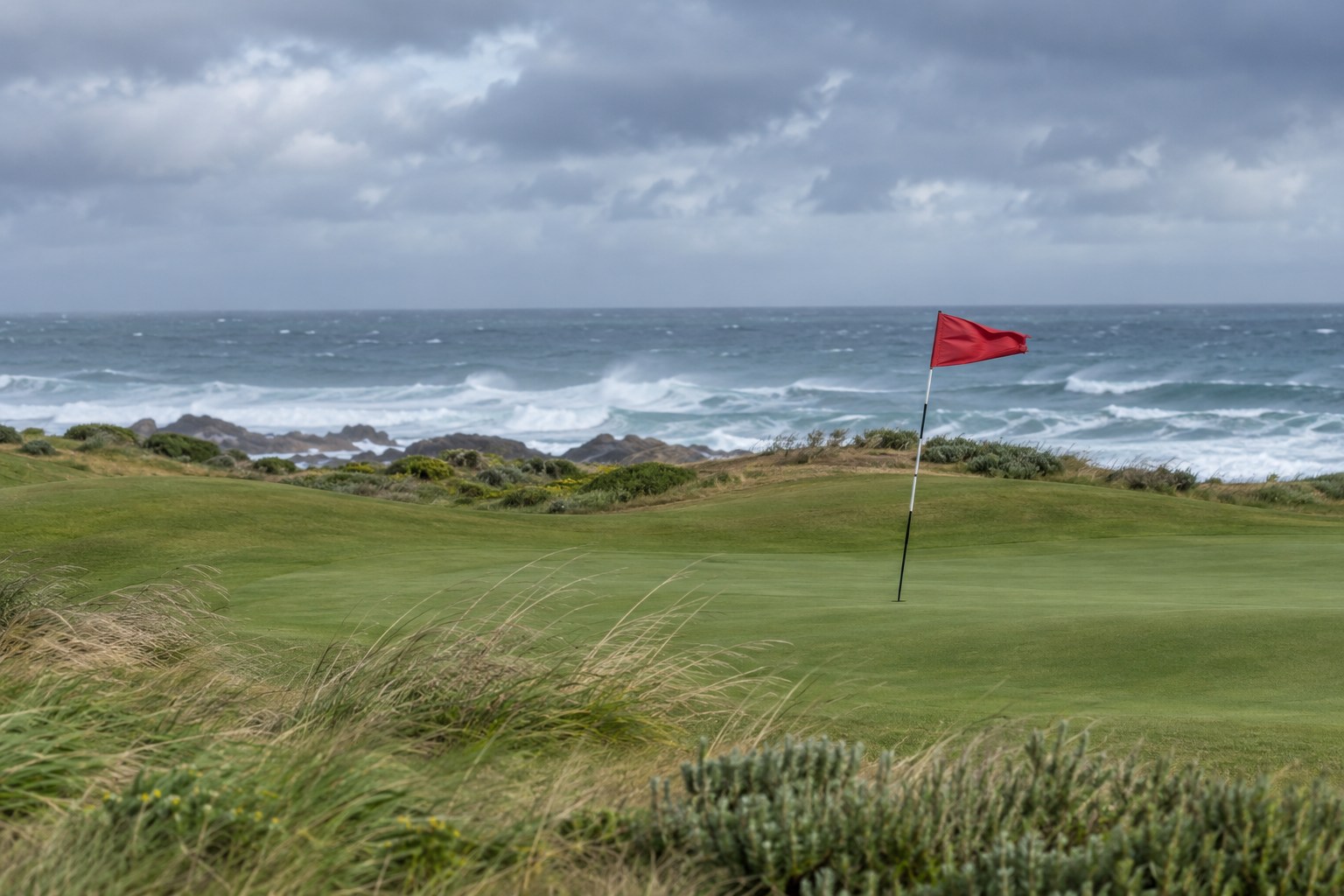
At Milnerton Golf Club, the wind can matter more than the length of the hole. The 18-hole course runs through a narrow strip of Milnerton, Cape Town, between the Atlantic Ocean and the Diep River-Rietvlei Lagoon system. Fairways are relatively flat, but water, exposed approaches and sloping greens punish loose distance control. A helpful breeze on the way out can become a headwind on the way home.
Before tee-off, check the wind direction and gust forecast, recent rain and any work on the greens. Firmness matters too: a ball landing on a dry fairway behaves differently from one landing on damp Kikuyu. Sunshine alone tells you little about how Milnerton will play.
Why the coastal setting changes the game
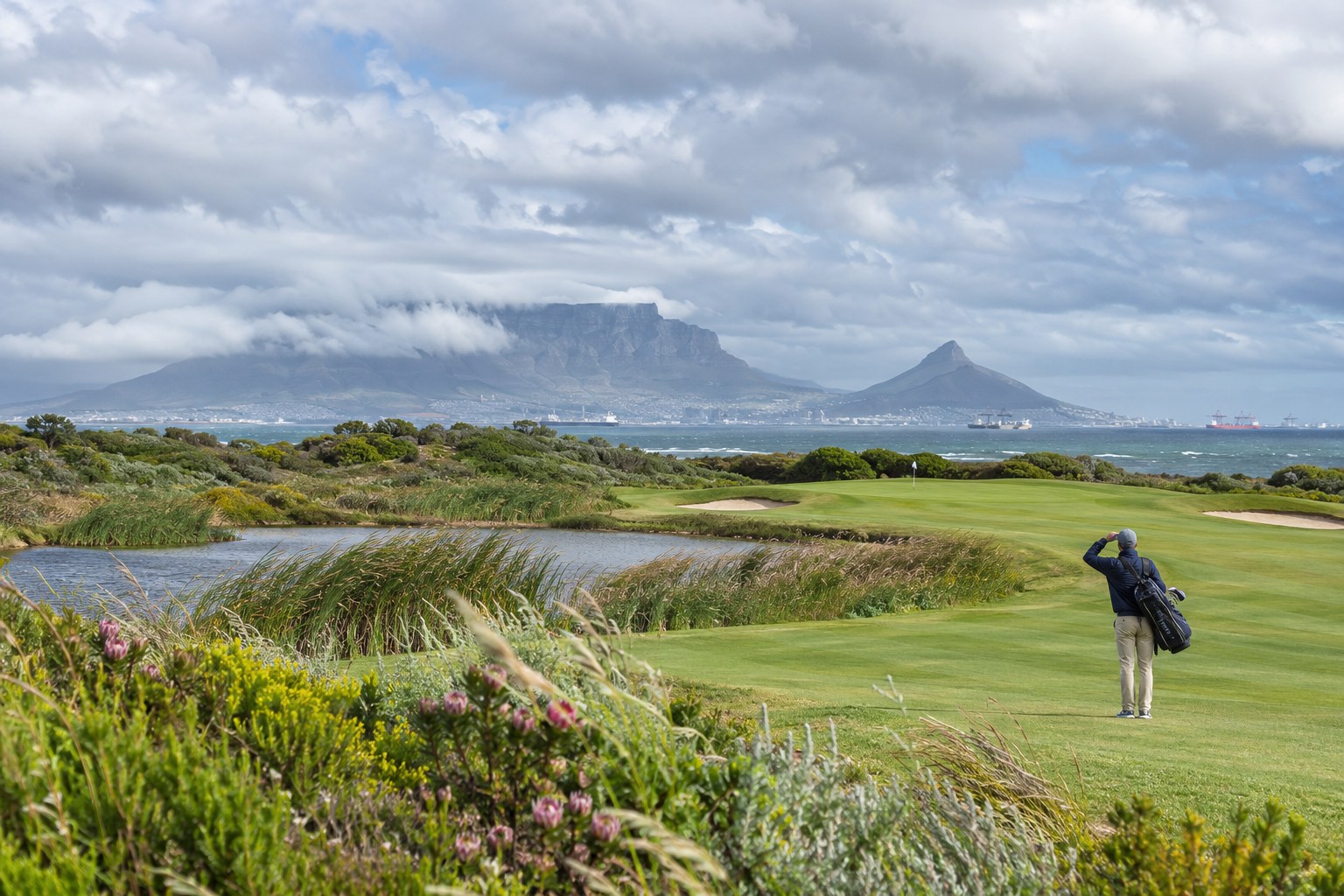
Milnerton Golf Club sits on Woodbridge Island, overlooking Table Bay and Table Mountain. Sandy ground, sea air and an out-and-back route give it a links-style feel. It is not a classic links course throughout. Some holes have a parkland character, and its inland water hazards require careful carries rather than the recovery shots associated with deep links rough.
Published details commonly give par 72 and approximately 6,101 metres, while some scorecards show par 71. The difference centres on the sixth: the club describes it as a par five on competition days and a par four on other days. Use the scorecard and tee markers for your round, not the par displayed in an app.
Wind conditions: the Cape Doctor and the turn for home
The Cape Doctor, Cape Town's prevailing summer south-easter, often shapes a round at Milnerton. When it follows the usual direction of play, golfers get help on much of the outward nine and face it on the inward nine towards the clubhouse. A northerly or shifting wind changes that arrangement; the routing does not guarantee nine easy holes followed by nine hard ones.
With a tailwind, drives may run farther and an approach can struggle to stop on a firm green. Into a headwind, a high, spinning shot loses carry. A crosswind presents a different problem: a ball struck on the intended line can drift towards the lagoon, bunkers or an out-of-bounds boundary before it lands.
Compare gusts and wind direction against the hole, rather than relying on the day's average speed. A three-quarter swing and lower flight often give better control into a stiff breeze than hitting harder. On a downwind approach, allow for extra run. Club choice still comes down to the carry needed over the hazard in front of you; adding two clubs by habit can be just as costly as taking too little.
Summer, winter and the best window for a round
At Milnerton, summer wind changes shot distance; winter rain changes the lie underfoot. Check both the forecast and the course report before choosing a tee time.
| Season | Typical conditions | Effect on play |
|---|---|---|
| Summer (December-February) | Dry spells, strong south-easterlies and exposed sunshine | More wind to judge; firmer ground can add run |
| Autumn (March-May) | Variable winds and a transition towards cooler, wetter weather | Carry, roll and green response can change between rounds |
| Winter (June-August) | Rain-bearing north-westerlies, cooler air and passing fronts | Soft lies or wet patches after heavy rain; access may be affected |
| Spring (September-November) | Changeable weather and renewed south-easterly periods | Wind shifts alter carry distance and shot shape |
An early summer tee time may beat the stronger afternoon south-easter, though there are windy mornings too. In winter, a fine start can give way to rain when a cold front moves through. Hourly gusts, recent rainfall and the expected arrival of a front tell you more than the month on the calendar.
Fairways, greens, bunkers and drainage
According to the club, the fairways grow Kikuyu grass and the greens have a Poa/Bent mixture. Around a green, thicker Kikuyu can catch the clubhead; a tight fairway lie calls for a cleaner strike. On the putting surfaces, moisture, mowing and recent maintenance affect pace more directly than the grass label does.
The sandy base helps rainwater drain during the Western Cape winter. It does not prevent every wet patch after prolonged rain. Nor does good drainage promise lush, even turf in a dry spell: irrigation, recovery work and foot or cart traffic all leave their mark.
Watch where an approach lands on the sloping greens. The wrong side of a contour can leave a long first putt or send the ball into a collection area. Bunker sand and green speed need judging on the day. The club's past course reports mention reseeding, hollow-tining and irrigation work, but those reports do not establish the condition of the surfaces now.
The holes where conditions matter most
Oceanfront tees, wetland edges, inland water and nearby housing make some misses considerably more expensive than others.
- 1st and 18th: The opening and closing holes share a broad playing corridor. A following wind helps the drive, but leave space for adjacent play.
- 3rd and 5th: Tees close to the Atlantic are exposed. Allow for crosswind drift, especially on the par-three 5th.
- 8th: This par five borders wetlands, with a hazard on the right and water by a narrow green. Downwind, a second shot can run on farther than planned; laying up may leave the safer approach.
- 9th: Water guards the front of the green. Carry distance matters more than aiming straight at a tucked flag.
- 12th: A headwind can make this par four feel much longer. Bushes sit to the right; the housing estate is out of bounds to the left.
- 13th-15th: Water near the 13th green, bunkers at the par-three 14th and water in front of and right of the 15th fairway leave little room for careless approaches.
- 16th-18th: The closing holes follow the river. A misplaced tee shot on the long finishing par four is hard to recover from when the wind is against you.
Leave shots in hand for the inward nine. A club that comfortably reached a target downwind on the outward stretch may be short of the same carry on the way back.
How to adjust shot selection to the conditions
Off the tee
Pick the safe landing area first, then choose the club that reaches it. In a crosswind, allow room on the side where the ball is likely to finish. A wide-looking fairway offers little comfort if the miss runs towards water or an out-of-bounds line.
Into and around the greens
Into a headwind, shorten the swing if that helps keep the flight down. Downwind, plan for more release on firm turf. A bump-and-run works when the approach is clear and the lie allows it; a bunker lip or water between ball and green takes that option away.
On the putting surface
Read the slope, then notice whether the wind is moving the ball on an exposed green. Use a few practice putts to judge pace. Damp turf, a recent cut or recovery from hollow-tining can change how a putt rolls.
What to establish before tee-off
The forecast tells you what weather may arrive during the round. A current course report tells you about turf work, access and any restrictions.
- Wind: Check hourly direction, sustained speed and gusts through the expected finish time, not just at tee-off.
- Rain: Check the previous day or two and the forecast arrival of any front or thunderstorm.
- Course condition: Ask about maintenance, temporary greens, repair areas, irrigation issues and cart restrictions.
- Set-up: Check tee markers, pin positions, local rules, the day's par and how the sixth is playing.
- Personal preparation: Carry drinking water and sun protection in summer; pack windproof and waterproof layers in winter.
No weather forecast can tell you exactly how firm a fairway is. A good turf report cannot rule out dangerous gusts or lightning either. For access and safety, the club's current notices and conditions on site take priority.
Is Milnerton suitable for beginners and higher-handicap golfers?
On a light-wind day, flat ground and open sightlines make Milnerton approachable. Add a strong Cape Doctor and an ordinary approach becomes a long carry. Water and residential out-of-bounds areas leave less room for a slice or a high shot caught by a gust.
For a first round, forward tees, a quieter forecast and targets away from hazards make more sense than chasing distance in a windy summer afternoon. Better players face their own test: keeping the flight down and accepting a longer club into the homeward holes.
What defines a good playing day in Milnerton?
Calm weather is welcome, but steady wind is often easier to play than unpredictable gusts. Reliable fairway bounce and consistent green pace matter too. Recent maintenance or isolated wet patches make club selection harder.
The Atlantic coastline, Rietvlei water hazards and contrasting outward and inward nines are part of what makes Milnerton distinctive. If the breeze strengthens after the turn, even a short hole on the card can require an extra club and a more generous target.